Industrial Cooling Solutions: Warehouse & Manufacturing Cooling Guide
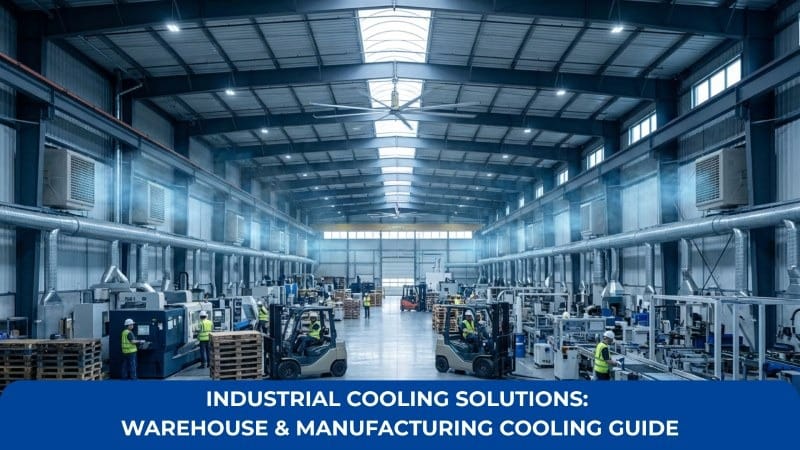
Excess heat inside warehouses, plants, and factories creates serious operational risks. High temperatures reduce worker productivity, strain equipment, and increase safety concerns, especially in demanding climates like Houston. For facility managers and operations leaders, temperature control directly impacts uptime, compliance, and overall efficiency.
Advanced industrial cooling solutions help stabilize indoor conditions, prevent downtime, and protect valuable machinery and inventory. Whether for seasonal demand or emergency support, choosing the right cooling approach ensures consistent performance and uninterrupted operations across industrial environments.
Why Industrial Cooling Solutions are a Business Critical Strategy
Extreme heat inside industrial facilities creates measurable operational risk, specifically during peak summer demand and production surges. Unlike office environments; warehouses and plants face unique challenges:
- High ceilings that trap heat
- Heat generated from machinery & production lines
- Limited airflow in dense storage areas
- Open loading docks allow hot air infiltration
- Seasonal surges that strain permanent HVAC systems
Industrial cooling solutions help mitigate these risks by delivering scalable and targeted cooling exactly where and when it’s needed. For decision-makers, this means:
- Reduced downtime
- Higher workforce productivity
- Fewer safety incidents
- Protection of temperature-sensitive inventory
- Compliance with safety standards
When cooling systems fail or simply can’t keep up, temporary deployments can prevent costly disruptions and maintain safe, productive working conditions.
How Does Poor Temperature Control Impact Industrial Operations?
Temperature instability in industrial facilities quickly affects productivity, safety, and profitability. What seems manageable can escalate into downtime, equipment strain, compliance risks, and rising operational costs in high-demand and high-heat operating conditions.
Reduced Workforce Productivity
High temperatures can cause fatigue, reduced focus, and slower physical performance. Even minor slowdowns across shifts can lower output, delay shipments, increase errors, impact morale, and reduce overall operational efficiency across departments.
Equipment Overheating
Machinery and electrical systems generate continuous heat during operations. Without adequate industrial cooling solutions, overheating can trigger shutdowns, damage sensitive components, reduce performance stability, shorten equipment lifespan, and lead to costly emergency repairs.
Inventory Damage
Temperature-sensitive products require stable environmental conditions. Poor warehouse cooling solutions can result in spoilage, material degradation, packaging damage, failed quality checks, compliance violations, and significant financial loss and reputational damage.
Safety & Compliance Risks
Excess heat increases the risk of heat stress, dehydration, and workplace accidents. Proper cooling supports worker safety, regulatory compliance, reduced liability exposure, improved alertness, and stronger overall workplace health standards.
For 24/7 facilities, these risks compound rapidly without a proactive cooling strategy and contingency strategy.
Common Industrial Cooling Solutions for Large-Scale Warehouses & Production Facilities
Different environments require different approaches. The most effective industrial cooling solutions are scalable, flexible, and engineered around actual heat load, airflow, and operational demands, not just square footage.
Spot Cooling for Localized Needs
When only specific zones require temperature control such as workstations, server rooms, electrical panels, or production cells, a spot cooler rental provides fast and targeted relief without overcooling the entire facility.
Spot coolers:
- Deliver focused cold air directly to high-heat problem areas
- Operate independently from existing HVAC systems
- Require minimal installation & setup time
- Help stabilize sensitive equipment or employee work zones
- Provide immediate short-term cooling during peak heat or system failure
A spot cooler rental is ideal for emergency coverage, supplemental cooling, or temporary projects where installing permanent systems would be costly, time-consuming, or unnecessary.
Temporary Air Conditioning for Large Spaces
When broader facility coverage is required, temporary air conditioning rental systems deliver higher capacity and stronger airflow for open industrial areas.
These systems are commonly used to cool:
- Large warehouse sections with heat buildup
- Manufacturing & assembly lines
- Industrial tents or temporary structures
- Facilities undergoing HVAC repair or replacement
Temporary air-conditioning rental solutions are especially valuable during seasonal demand spikes, expansion phases, or unplanned outages, when permanent systems cannot efficiently manage rising heat loads.
Commercial Portable Systems
For facilities requiring heavy-duty cooling capacity, commercial air conditioners for rent provide powerful and scalable solutions designed for industrial performance standards.
These units:
- Handle continuous & high-demand operational environments
- Support extended runtimes for 24/7 facilities
- Integrate with ducting systems for controlled airflow distribution
- Cover larger square footage areas with consistent cooling output
- Maintain stable temperatures in heat-intensive production zones
Commercial air conditioners for rent are commonly deployed during planned shutdowns, facility upgrades, seasonal overload, or emergency breakdowns, where operational continuity is critical.
Warehouse Cooling Challenges & Practical Temperature Control Solutions
Warehouse environments create temperature control issues that standard HVAC systems often cannot handle efficiently during peak operational demand.
Operational Cooling Challenges in Warehouses
- High Ceilings & Heat Stratification: Heat rises and accumulates near ceilings, leaving workers below in stagnant warm air without proper circulation or destratification systems.
- Loading Dock Exposure: Frequent dock door openings generate hot and humid air inside. It makes consistent temperature control difficult during busy shipping periods.
- Machinery & Equipment Heat Output: Forklifts, conveyors, lighting, and charging stations continuously generate heat, gradually increasing internal temperatures and creating localized hot spots.
Practical Warehouse Cooling Solutions
Effective warehouse cooling solutions typically combine multiple approaches:
- Targeted Cooling Zones: Designated cooling areas focus airflow where employees and equipment need it most to improve comfort and operational stability.
- Portable Spot Systems: Spot cooler rental units provide immediate relief for high-heat zones without modifying permanent HVAC infrastructure.
- Air Circulation Enhancements: Improved airflow reduces heat stratification, balances temperatures, and supports more consistent warehouse-wide cooling performance.
- Scalable Rental Units During Peak Demand: Flexible rental systems expand cooling capacity during seasonal spikes, preventing overload of permanent equipment.
A spot cooler rental can quickly stabilize high-risk zones such as packing stations or equipment areas, while larger systems maintain consistent temperatures across broader warehouse sections.
Industrial Plant & Factory Cooling Requirements
Manufacturing plants and industrial factories operate within strict temperature tolerances where even minor fluctuations can disrupt processes, damage materials, or reduce precision. Heat affects not only workforce safety and comfort, but also machinery performance, product quality, and overall production efficiency.
Industrial cooling solutions in plant environments are designed to support:
- Heat-intensive machinery that generates a continuous thermal load during operation.
- Electrical control panels require stable temperatures to prevent malfunctions or shutdowns.
- Production line stability where consistent climate conditions ensure product accuracy and quality.
- Cleanrooms or specialty zones that demand controlled environments for compliance and performance.
- 24/7 production schedules, where downtime can result in significant financial losses.
In high-demand facilities, temporary air conditioning rental helps prevent disruptions during maintenance or HVAC failures. For larger heat loads, commercial air conditioners for rent provide reliable, high-capacity cooling to maintain stable production conditions.
When Emergency Cooling Becomes Critical
Cooling failures can escalate quickly, especially in high-demand industrial environments. For decision-makers, the focus is not just restoring comfort; it’s protecting production, safety, and revenue. Therefore, they need emergency cooling solutions.
Common Triggers for Emergency Cooling Needs
- Unexpected HVAC system breakdown
- Power instability or grid stress
- Extreme heat waves exceeding system capacity
- Weather-related disruptions are impacting facility infrastructure
Key Decision-Making Priorities
- Minimize production downtime
- Protect heat-sensitive equipment & materials
- Maintain worker safety and compliance standards
- Deploy solutions with minimal installation time
- Ensure scalable capacity for larger facility areas
A rapid spot cooler rental can stabilize high-risk zones immediately, while a temporary air conditioning rental supports broader operational areas. Facilities that pre-plan access to commercial air conditioners for rent reduce response time and maintain continuity during peak demand periods.
How to Choose the Right Industrial Cooling Solution for Your Facility
Selecting the right system requires more than choosing equipment capacity. Facility managers must evaluate operational, environmental, and infrastructure factors to ensure reliable performance and cost efficiency.
- Facility Size & Layout: Open warehouses, high ceilings, and wide floor plans require different airflow strategies than segmented production areas or enclosed process zones.
- Heat Load Assessment: Evaluate machinery heat output, lighting, occupancy levels, and external heat exposure to determine total cooling capacity requirements.
- Duration of Need: Define whether cooling is required for emergency response, seasonal demand, maintenance shutdowns, or long-term operational support.
- Power Availability: Confirm that existing electrical infrastructure can support the required load without risking overload or performance instability.
- Humidity Control Requirements: In high-humidity regions, cooling systems must manage both temperature and moisture to prevent condensation, corrosion, or product damage.
- Deployment Speed & Accessibility: Emergency scenarios demand rapid setup with minimal disruption to operations and production flow.
For many industrial environments, combining warehouse cooling solutions with targeted spot cooler rental units creates a scalable and layered strategy that balances flexibility, efficiency, and operational continuity.
Proactive Planning vs. Reactive Cooling: What Industrial Facilities Should Know
Cooling strategy affects operational stability, costs, and overall risk. Facilities either plan or respond after failure. Understanding both approaches helps you make informed and risk-aware decisions.
Proactive Cooling Planning
A proactive approach integrates industrial cooling solutions into broader facility risk management and operational continuity planning.
Key Characteristics:
- Seasonal cooling assessments before peak heat periods
- Heat load evaluations across production zones
- Pre-arranged temporary air conditioning rental agreements
- Established vendor relationships for commercial air conditioners
- Identified power access points & equipment placement zones
- Monitoring of high-risk areas like control panels & server rooms
Operational Impact:
- Reduced unplanned downtime
- Faster deployment during emergencies
- Predictable budgeting & cost control
- Improved worker safety & morale
- Greater equipment protection & lifespan
This strategy focuses on preparedness to minimize disruption before problems occur.
Reactive Cooling Response
A reactive approach activates cooling measures only after a system failure, or a heat-related disruption impacts operations.
Common Triggers:
- Sudden HVAC breakdown
- Extreme heat exceeding system capacity
- Equipment overheating
- Production stoppage due to unsafe conditions
Operational Consequences:
- Increased downtime while sourcing equipment
- Limited availability of rental systems during peak seasons
- Higher emergency rental & logistics costs
- Greater risk to production schedules
- Elevated safety concerns during response delays
While reactive cooling can restore operations, it often involves higher stress, urgency, and financial impact.
Proactive Planning vs. Reactive Cooling: A Tabular Comparison
| Aspect | Proactive Cooling | Reactive Cooling |
| Timing | Planned before peak demand. | Initiated after failure. |
| Cost Structure | Budgeted and controlled. | Often urgent and higher costs. |
| Downtime Risk | Minimized. | Increased. |
| Equipment Availability | Secured in advance. | Dependent on availability. |
| Operational Stability | Maintained. | Temporarily disrupted. |
| Decision Pressure | Strategic and measured. | Time-sensitive and urgent. |
How Industrial Facilities in Extreme Heat Benefit from Scalable Cooling
Facilities operating in high-temperature and high-humidity conditions face unique operational challenges. Extended heat waves, seasonal weather disruptions, and grid strain increase the risk of downtime, equipment failure, and workforce heat stress.
Scalable industrial cooling solutions provide the flexibility to:
- Expand cooling capacity during peak demand periods.
- Supplement permanent HVAC systems without overloading infrastructure.
- Maintain operational stability during repairs or system maintenance.
- Protect worker safety & health in critical areas.
Warehouse cooling solutions are particularly vital in logistics hubs, where consistent temperature control ensures rapid order fulfillment.
How to Protect Industrial Productivity, Equipment, and Staff
Industrial cooling solutions go beyond comfort. They are essential operational safeguards. For facility managers, plant operators, and safety leaders, maintaining proper temperature control directly impacts:
- Output Efficiency: Consistent temperatures help maintain production speed & quality.
- Equipment Lifespan: Prevents overheating & reduces wear on machinery.
- Compliance Standards: Supports safety & regulatory requirements.
- Employee Retention: Comfortable work environments improve morale & reduce turnover.
- Financial Performance: Minimizes downtime, emergency costs, and productivity losses.
Targeted industrial cooling solutions help manage heat in critical areas.
- Spot coolers provide quick relief during HVAC repairs.
- Temporary air conditioners handle peak demand periods.
- Commercial air conditioners support large-scale cooling during emergencies.
In industrial environments where downtime can cost thousands per hour, proactive cooling planning is one of the most effective risk mitigation strategies. Assess your facility today and implement scalable industrial cooling solutions to protect operations, people, and productivity. Get in touch to explore tailored cooling solutions for your facility.
Frequently Asked Questions (FAQs)
How do I determine the right industrial cooling capacity for my facility?
Start with a heat load assessment that includes machinery output, facility size, ceiling height, occupancy levels, and external climate exposure. An undersized system leads to inefficiency, while oversized equipment increases operational costs.
When should I choose temporary cooling instead of upgrading permanent HVAC?
Temporary cooling is ideal for seasonal demand spikes, emergency failures, maintenance shutdowns, or short-term projects. It provides flexibility without large capital investment or long installation timelines.
How quickly can emergency industrial cooling solutions be deployed?
Most portable and rental-based industrial cooling solutions can be deployed within hours, depending on site readiness and power availability. Pre-planned vendor agreements significantly reduce response time.
What risks should I consider if my facility operates without backup cooling?
Lack of backup cooling increases the risk of production downtime, equipment overheating, inventory damage, safety incidents, and compliance exposure, especially in high-heat regions.
How do I balance cost, efficiency, and reliability when selecting a cooling solution?
Focus on total operational impact rather than equipment cost alone. Consider downtime risk, scalability, energy efficiency, deployment speed, and long-term operational continuity when evaluating options.
Comments are closed.
